Every Machine Has a Story,
Every Story Saves Lives
At Medreach Limited, impact is more than numbers — it is the mother who no longer travels hours for a simple diagnostic scan, the clinic that can finally offer services it never had the tools for, and the healthcare worker empowered to make life-saving decisions.
"Every piece of equipment we deploy carries a story: a story of patients reached, lives improved, and communities strengthened."
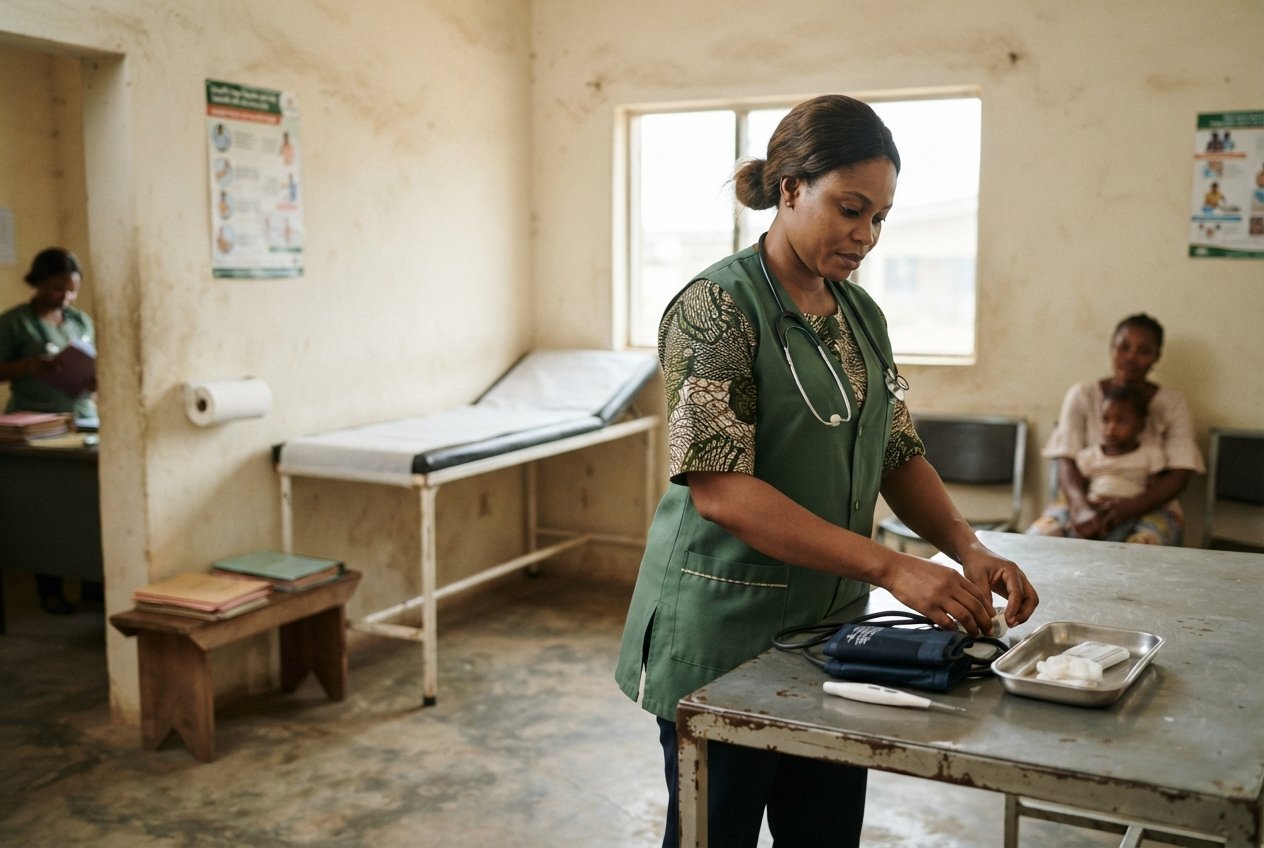
The Gap Between Equipment and Care
Across Nigeria, many primary and community health facilities operate without the equipment they need. Machines sit idle abroad while clinics struggle, patients wait unnecessarily, and preventable complications go untreated.
We realised early on that donating equipment is only the first step. Real impact comes from ensuring it is used, maintained, and integrated into daily operations — so that donations translate into measurable, sustainable outcomes.
In one pilot clinic, an ultrasound machine we deployed allowed midwives to detect high-risk pregnancies early. Before the deployment, expectant mothers often had to travel more than 50 kilometres for scans. Now, the clinic sees more patients safely, reduces referrals, and improves maternal outcomes.
Pilot deployment · Reporting in progress"A donated machine does not save lives sitting in a warehouse."
Functional equipment retires from hospitals abroad every year. Meanwhile, clinics across Nigeria cannot afford the tools needed to serve their communities.
Figures reflect pilot-phase observations. Verified aggregate statistics with full period and scope will be published as reporting matures.
Responsible Impact Begins Before Delivery
Every stage of our process is connected — from the first facility assessment to the last maintenance review. Impact is built into the entire lifecycle of every deployment.
Assessment
Evaluate clinic readiness, patient demand, infrastructure, and staff capacity before committing to deployment.
Deployment
Coordinate logistics, installation, calibration, documentation, and full handover with facility staff.
Maintenance
Schedule preventive servicing, coordinate technical support, and monitor operational reliability over time.
Reporting
Track usage, patient reach, uptime, and outcomes — share verified results with donors and partners.
"We do not just leave machines behind. Each piece of equipment is monitored for functionality, usage, and patient benefit — because accountability is what separates impact from intention."
Practical Outcomes Our Deployments Are Designed to Support
These are the areas of change Medreach works towards through every deployment. Where verified project data exists, outcomes are reported with full context, scope, and period.
Outcomes below represent intended and observed directions of change, not verified aggregate statistics. Confirmed figures — with source, period, and facility scope — will be published as project reporting matures.
Stronger local diagnostic capacity
Clinics gain tools to identify conditions on-site rather than referring patients for basic diagnostics elsewhere.
Reduced travel burden on patients
Patients receive care closer to home, reducing the cost, time, and risk of long-distance referrals.
Fewer avoidable referrals
Facilities equipped to manage more cases in-house reduce unnecessary strain on tertiary hospitals.
Better use of healthcare workers' skills
Trained staff working with appropriate equipment make better clinical decisions and deliver safer care.
Increased community trust in local facilities
Capable, well-equipped clinics attract more patients and reduce reluctance to seek early treatment.
How Medreach Measures Impact
Impact at Medreach is tracked across four dimensions — not just whether equipment was delivered, but whether it continues to serve patients reliably and whether facilities have grown their capacity as a result.
Patients served
How many patients are seen using deployed equipment within a defined reporting period.
Procedures conducted
Which diagnostic or treatment procedures the equipment enables, and at what frequency.
Communities reached
The geographic and demographic catchment area served by each equipped facility.
Equipment uptime
The proportion of time each device is operational and available for clinical use.
Maintenance completion
Whether scheduled preventive maintenance has been completed on time and by qualified personnel.
Operational reliability
Frequency and nature of faults, repairs, and downtime episodes across each deployment.
Service expansion
New services or procedures the facility can now offer as a direct result of the deployment.
Referral patterns
Changes in the volume and nature of referrals made before and after equipment installation.
Staff capability
Evidence of training completed and staff confidence using and maintaining deployed equipment.
Reduced travel burden
Whether patients are accessing comparable services closer to home than before the deployment.
Faster care pathways
Whether diagnostic turnaround and treatment decision times have improved for common presentations.
Community health outcomes
Facility and community feedback on the practical difference equipment has made to local health-seeking behaviour.
Patients served
How many patients are seen using deployed equipment within a defined reporting period.
Procedures conducted
Which diagnostic or treatment procedures the equipment enables, and at what frequency.
Communities reached
The geographic and demographic catchment area served by each equipped facility.
Equipment uptime
The proportion of time each device is operational and available for clinical use.
Maintenance completion
Whether preventive maintenance has been completed on time and by qualified personnel.
Operational reliability
Frequency and nature of faults, repairs, and downtime episodes across each deployment.
Service expansion
New services or procedures the facility can now offer as a direct result of the deployment.
Referral patterns
Changes in referral volumes before and after equipment installation.
Reduced travel burden
Whether patients are accessing comparable services closer to home than before.
Community health outcomes
Facility and community feedback on the practical difference equipment has made.
The Human Side of Impact
Impact is never just numbers. It is a community experiencing real change. Click any story card to read more detail.
Ultrasound Deployment — Antenatal Care
Midwives detected high-risk pregnancies early. Expectant mothers who previously travelled over 50km for scans now receive care on-site. Referrals declined and maternal outcomes improved within the first months of deployment.
Equipment
Portable ultrasound unit — donated, assessed, and calibrated prior to installation.
Facility type
Primary healthcare centre serving a rural catchment area.
Observed change
Early identification of high-risk pregnancies increased; patient travel burden reduced significantly; clinic capacity for antenatal care expanded.
Verification status
Pilot-phase observation. Full verified report pending field data compilation.
Patient Monitor & Oxygen — Rural Imo State
Emergency cases previously referred to distant hospitals were managed on-site within three months. Community trust grew, more patients sought care locally, and staff reported fewer complications.
Equipment
Patient monitoring system and oxygen concentrators — received, tested, and installed by biomedical technician.
Facility type
Faith-based mission clinic, rural Imo State.
Observed change
In-house emergency case management increased. Referrals to tertiary facilities reduced. Patient and community confidence in the facility improved over the reporting window.
Verification status
Pilot-phase observation. Full verified report pending field data compilation.
Laboratory Centrifuge — UK Hospital Donation
A decommissioned centrifuge that would have sat in storage now processes hundreds of patient samples each month. The donor receives detailed usage and outcome reports.
Equipment
Laboratory centrifuge — donated by a UK hospital following an equipment upgrade cycle.
Facility type
Community clinic with limited diagnostic capability prior to deployment.
Observed change
On-site sample processing enabled; patient wait times for basic blood analysis reduced; donor supplied with usage and outcome report at agreed intervals.
Verification status
Pilot-phase observation. Full verified report pending field data compilation.
As deployments mature and field reports are completed, full case studies with facility type, location, equipment details, observed outcomes, and photographs will be published here. We do not publish unverified claims.
Sustaining the Impact
We know that equipment left without follow-up rarely delivers the intended results. Medreach goes beyond delivery — training staff, scheduling preventive maintenance, coordinating technical support, and monitoring equipment use.
Equipment Records & Handover Documentation
Every device is documented at point of handover — condition, calibration status, and facility sign-off recorded.
Agreed Reporting Schedules
Donors and partners receive reporting at agreed intervals — what was used, by how many patients, and in what condition.
Maintenance Logs
Preventive and corrective maintenance is recorded, giving partners confidence the equipment remains operational.
Follow-up Reviews
Scheduled field reviews assess whether the deployment continues to meet its original purpose and identify emerging needs.
Our Commitment to Transparency
Every statistic Medreach publishes will include a reporting period, the facilities in scope, and the source of the figure. We will not display aggregate numbers without context.
Where data is still being collected, we say so clearly. Where verified results are available, we share them with full disclosure of how they were calculated.
Donors and partners can request the underlying records, maintenance logs, and field assessment notes for any deployment they have supported.
Building a Carefully Managed Network of Supported Facilities
Medreach' long-term direction is to develop a network of healthcare facilities across Nigeria — each equipped, maintained, and monitored through a consistent, accountable process.
We are building this carefully. Expansion will follow evidence: facilities that demonstrate strong deployment outcomes and reliable operational practices will form the foundation for broader reach. We do not claim scale we have not earned.
Deployment Map — Coming Soon
An interactive Nigeria map showing verified partner facilities, equipment categories, and deployment status will be activated as project reporting is completed.
No markers will be added until deployment data is verified and approved for publication.
Support a Deployment That Is Planned, Documented, and Followed Through
Whether you want to donate equipment, fund a deployment, contribute technical expertise, or explore a partnership, we would like to hear from you.
Submitting this form starts a discussion. It does not create a financial or contractual obligation.
- Donate equipment from your facility
- Fund or co-fund a deployment
- Explore a CSR or foundation partnership
- Apply as a partner healthcare facility
- Contribute biomedical or technical expertise
Your Support Allows More Machines to Reach More Clinics
Every partnership, every equipment donation, every collaboration creates the next story of real impact — more staff empowered, more patients reached, more communities strengthened.